

Givan resigns as First Minister
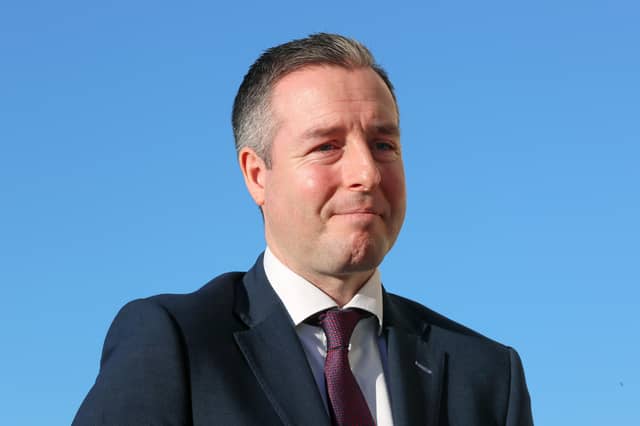
Paul Givan has resigned as Northern Ireland’s First Minister as part of the DUP’s protest against the Northern Ireland protocol.
The move means that deputy First Minister, Sinn Fein’s Michelle O'Neill, also loses her position as the two roles are a joint office shared between Stormont’s two biggest parties.
Therefore if one leader resigns, the other leader’s resignation is also triggered.
It is understood that the Executive will continue to function as other ministers will remain in place to run their departments.
However, as there would be no First or Deputy First Minister in place, no new decisions could take place.
That would mean that the current COVID-19 restrictions, including the wearing of masks would remain in place for the forseeable.
Similarly, an energy scheme which would see 280,000 people receive a £200 grant would be thrown into jeopardy while there is doubt over whether a scheduled apology for victims of historical sexual abuse will be made.
Legislation which is due to be completed at Westminster next week will allow the Assembly to continue for between six and nine months without an election.
Speaking at the Crowne Plaza Hotel, Mr Givan said the “institutions are being tested once again and the delicate balance created by the Belfast and St Andrew’s agreements has been impacted by the agreement made by the United Kingdom government and the European Union which created the Northern Ireland Protocol”.
He added, “The consent principal is a cornerstone of the Belfast Agreement, and it is my earnest desire that all sections of the community will be able to give consent to the restoration of a fully functioning Executive through the resolution of the issues that have regrettably brought us to this point.”
Mr Givan said that being First Minister had been the “privilege of my lifetime”.
He added that when he began in politics 12 years ago he “never expected to serve the people of Northern Ireland as first minister”.
The Lagan Valley MLA said that “over the past eight months, working with the deputy First Minister, we have made progress that will improve our society. “
Earlier, Sinn Féin president Mary Lou McDonald said “we cannot stagger on in the months ahead without a functioning executive”, adding that her party would not facilitate this.
“In the absence of a functioning executive, an early election must be called and the people must have their say,” she said.
“We can do so much better than this chaotic theatre.”
Speaking at the same press conference, Ms O'Neill said the actions of the DUP were a "deliberate act of harm”.
Meanwhile, UUP leader Doug Beattie has said that the DUP have shown "no leadership whatsoever".
"If there's changes to the protocol in the coming weeks or months, it'll be because of the hard work done behind the scenes to get those through negotiations.
"It will not be done by a minister resigning from their post."
The DUP leadership’s actions “represent a gross betrayal of people in Northern Ireland,” according to SDLP leader Colm Eastwood.
"Resigning from government when people are struggling to provide for their families, heat their homes and deal with the cost of living tells you all you need to know about the DUP - for them the party will always come first and ordinary people come last," he added.
"People deserve better than a choice between bad government or no government."
As for the Alliance Party, their deputy leader, Stephen Farry, said Mr Givan’s resignation would be “an act of huge harm”, adding that it was “a self-destructive approach by the DUP”.
On the other hand, Jim Allister, the leader
However, the leader of the Traditional Unionist Voice (TUV) party, which is not in the power-sharing coalition, said Mr Givan's resignation would be "better late than never".
"It's the price of Stormont implementing a protocol that day-by-day is dismantling the union," Jim Allister said.
"It is a price no unionists can pay or should have ever had to pay."
Speaking following the resignation of the first minister, DUP leader Sir Jeffrey Donaldson said the party had reminded the UK government of its "promises."
"This commitment was the basis upon which we re-entered the executive in early 2020 and have participated in the political institutions since then," he said.
"I warned that as leader of the DUP, I was not prepared to lend my hand to a protocol which so fundamentally undermines the union and the economic integrity of the United Kingdom and Northern Ireland's position in it."