

Coronavirus: Army assistance welcomed
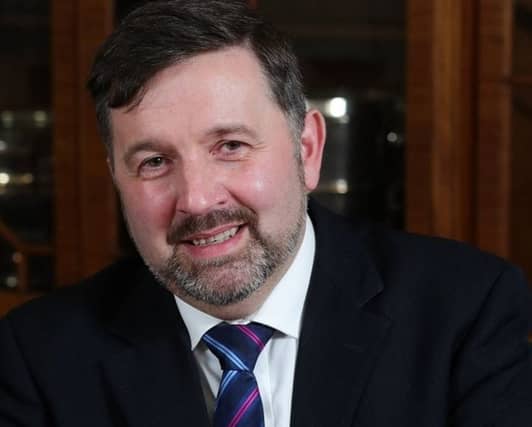

THE decision to formally request the army’s assistance in the fight against coronavirus has been broadly welcomed by politicians in the ABC area.
THE decision to formally request the army’s assistance in the fight against coronavirus has been broadly welcomed by politicians in the ABC area.
Representatives from the DUP, UUP, SDLP and the Alliance Party have all welcomed Health Minister Robin Swann’s request to use the skills and logistical expertise the Army will be able to provide.
Sinn Fein have however, sought a meeting with the Secretary of State for Northern Ireland, Brandon Lewis and the Tanáiste, Simon Coveney about the MLA’s decision.
Speaking to the Local Democracy Reporting Service, the Minister’s party colleague and UUP MLA for Upper Bann, Doug Beattie, explained that this is far from the first time the army have helped out in Northern Ireland when required.
“The decision to use the military in Northern Ireland may be contentious for many but it is not rare or exceptional,” he said.
“The reality is that OP HELVETIC has been an enduring Military Aid to the Civil Authority (MACA) for over 10 years. In 2013, the then Northern Ireland Agriculture Minister, Michelle O’Neill MLA of Sinn Fein called in the military to assist with the delivery of animal feed to stranded animals during the vicious winter period.
“On the reverse side of the argument, the Irish Defence Force helicopters from the Irish Republic were used in Northern Ireland to fight bush fires.”
“Any MACA in Northern Ireland will be skills-based, engineers, drivers, medics, planners and workforce on mass with a command and control element already built in.”
The Ulster Unionist representative also claimed such action had been a possibility for some time.
“The Health Minister made it clear some weeks ago that he would, if needed, call for military assistance,” said Mr Beattie.
“The Sinn Fein Finance Minister, Conor Murphy MLA, made it clear he would not object to such a move and the Justice Minister, Naomi Long MLA, has clearly liaised with the military to create a resting facility within Kinnegar Barracks.
“If military assistance can help a society ravaged by Covid-19, it must be worth taking time to understand the ground truth of the situation.
“Nobody in Northern Ireland will ask if Personal Protective Equipment (PPE) or ventilators were provided by a military driver or civilian driver when they are gasping for breath or if a doctor treating them is military or not.
“They will just want to live.”
The SDLP’s Upper Bann MLA, Dolores Kelly said exceptional times call for exceptional measures.
“There would be no role for military personnel in security matters but in the middle of a public health emergency, political leaders must be prepared to do the uncomfortable thing to save lives,” said the SDLP’s policing spokesperson.
“Military involvement in the logistics of PPE distribution, which we know is a critical problem and the construction of a Nightingale hospital must be up for consideration.
“It would be wrong to pick partisan fights over emergency measures necessary to save lives and protect the health service staff.
“There should however, be no additional security role for these services. This is a deeply uncomfortable position to be in. But the Health Minister is acting quickly in a very fast moving environment.
“We must all be prepared to do what it takes to save lives.”
The DUP Councillor for Portadown, Darryn Caubsy warmly welcomed the army’s involvement.
“I welcome the Minister’s decision to call for military assistance to support the battle against Covid-19,” he said.
“It is essential we utilise all available resources to protect lives and support our NHS. The British Armed forces are the best in the world and their skills and experience will indeed be a welcome boost to those fighting this pandemic on the frontline”.
“These are unprecedented times and we must work collectively to defeat this virus. I appeal to everyone to Stay Home, Stay Safe, Save lives.”
The Alliance Party’s Lagan River representative Eoin Tennyson said his party also “welcome any and all support” at this time.
“The army’s logistical capabilities may prove vital in delivering life-saving medical equipment and supplies to frontline healthcare workers,” said Councillor Tennyson.
“Ultimately, families with a loved one in hospital will be more concerned about their prognosis than who delivered the equipment.
“The Minister has the Alliance Party’s full support in taking these extraordinary steps to try and save lives. That must be the number one priority for us all.”
When asked for comment, a Sinn Fein spokesperson referred the Local Democracy Reporting Service to the statement released by Michelle O’Neill on 11 April.
“I have been informed that the Minister for Health has unilaterally and without consultation with Executive colleagues requested limited assistance from the British Army,” said the Deputy First Minister.
“Sinn Féin has made it clear we will not rule out any measure necessary to save lives, protect the public and tackle the spread of coronavirus.
“However, no proposal to use British military personnel in the north for roles normally performed by civilians has come before the Executive.
“I have raised the sensitivities of British military intervention directly with the British Secretary of State Brandon Lewis.”
She continued: “The Health Minister has a responsibility to exhaust all options, including the use of other blue light public services and civilian contractors, to ensure that ventilators and life saving equipment are moved swiftly to where they are needed most.
“The Department for Health has already contracted a local civilian contractor to scope out building a HSC-led civilian ‘field hospital’.
“It remains Sinn Féin’s position that any proposed new Nightingale hospital should remain under the care and control of the HSC.
“Sinn Féin is seeking an urgent meeting with the health minister, on his failure to consult ministerial colleagues at yesterday's Executive meeting.
“We will also be seeking meetings with the British Secretary of State, the Tanáiste and the PSNI given the seriousness of a decision to bring in the British military.”